
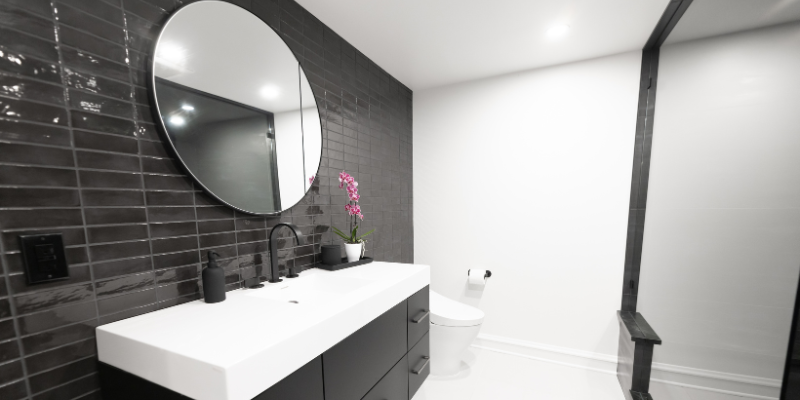
A kitchen, bathroom, basement, or whole home renovation is a major investment, and how you utilize your budget plays a big role in how successful the project feels after completion. Before you get too far into the process, it’s important to understand what your budget can realistically achieve.
This has become even more challenging in recent years. The average cost of residential remodeling projects has increased by 40 to 50 percent over the past five years, and many homeowners are surprised by how far their initial estimate falls short when real planning begins.
If you’re planning home renovations in Cleveland, this article will help you plan more effectively. We’ll explain where remodeling budgets can go wrong, and what you can do to get the most value from your investment.

Where Remodeling Budgets Go Wrong
Most homeowners begin the renovation process by guessing at a budget and then calling contractors to ask for quotes. That number may be based on what they’ve heard from friends, seen online, or watched on home improvement shows. The problem with these types of budgets is that they don’t reflect the full scope of work, and this is where the miscalculation begins.
Homeowners may reach out to multiple contractors, comparing quotes and prices to find the best option. But many don’t realize that contractors can’t provide a reliable quote with incomplete information. A good proposal requires real planning, specifications, and time. Without this information, the quote provided can be inaccurate and may not reflect the actual cost of the project.
This leaves homeowners with wildly different estimates because each contractor works differently, and the work included in one proposal may differ from another. For example, one quote might include:
- demolition and structural work
- plumbing and electrical upgrades
- fixture and finish selections
- detailed installation and labor requirements
While another contractor may only be pricing a portion of the work.
Rapidly rising costs compound the problem. Consider what we’ve experienced here in Cleveland during the last several years.
“We designed and budgeted a kitchen remodeling project in late 2020, but the client chose not to move forward at the time,” said Andy Ieropoli, owner and general manager of Advance Design & Remodel. “They’ve recently approached us about completing the project, and while the design is still relevant, the cost to complete it today has deviated significantly from the estimate five years ago.”
This is a common scenario these days. Homeowners may believe they have a solid budget, but end up surprised at final costs, especially if they underestimated the full scope of work.
If the project moves forward without an accurate scope of work and budget, unforeseen issues such as structural concerns or material delays can lead to schedule changes, frustration, and cutting back on features or finishes.
These issues can be minimized through detailed planning and working with design-build contractors who understand every stage of your home renovation. Design-build contractors define the scope of work from the beginning, refine the design with your input, and provide written specifications with detailed cost estimates, including allowances for fixtures and finishes. Because the design and construction teams are involved from the start, potential issues like structural limitations or permitting requirements can be factored into the budget before work begins.
How to Get the Most Value from Your Remodeling Budget
The most common mistake most homeowners make is hiring contractors with the lowest bid. It doesn’t matter how expensive your fixtures or fittings are or how great your design is. If the execution lacks planning and preparation, mistakes will happen, and costs will increase.
Some of the things you can do to ensure you get the most value out of your budget for a renovated space that you love include:
Define Scope properly
A scope of work is a detailed description of the work you’d like to complete. Ideally, you should put it in writing and be as detailed as possible, so your contractor understands what you want included in the project. This starts with you, your partner, and any other decision makers. Get clear on what matters most, what your priorities are, and what you want this remodel to solve.
It also helps to think about what you’d be willing to sacrifice if budget becomes a concern. This can help with decision-making as you work through the design and planning process.
Budget Range
Your initial budget should be a cost range rather than a set amount. This gives your contractor flexibility to provide options that meet your needs at different investment levels. It also helps set realistic expectations. No two remodels are the same and costs vary widely depending on the features and finishes involved.
A budget range is also useful because many homeowners are unfamiliar with the true cost drivers of a project. For example, a small luxury kitchen or bathroom remodel in Cleveland can cost far more than a larger economy-grade remodel. Budget planning should not be based on square footage but on what you want to include in your home renovation.
Design and Planning
If you want to get a more realistic renovation cost estimate, the first step is to invest in design. A complete design includes detailed specifications, allowing your contractor to establish accurate costs.
Reliable quotes take time to prepare. For kitchens, bathrooms, and other major renovations, it can take several days of effort to produce an accurate proposal. Planning a kitchen remodel in Cleveland typically requires several months of coordination between the homeowner, designer, and contractor before construction can begin.
A paid professional consultation is not an extra expense. It gives you a strong starting point and helps define what’s realistic within your budget, so you can make informed decisions.
Design-build contractors provide a clear picture from the start. Once the design is finalized, you receive a timeline that’s typically more accurate than when multiple teams are involved. The design and construction teams are in communication from the start, and can anticipate and resolve potential issues early, avoiding costly delays. This expert collaboration ensures your home remodel is completed on time, so you can start enjoying your new space sooner.
Don’t Get Caught in the Middle
“Either keep your project simple or commit to going all out. Don’t get caught in the middle and spend a large portion of your remodeling budget on an outcome you don’t love,” advises Andy Ieropoli, owner and general manager of Advance Design & Remodel.
Many homeowners fall into the trap of spending more when trying to save money. They make too many upgrades within a limited budget, compromise on key decisions, or change the plan midway. The result is a renovation that doesn’t match their vision and adds little long-term value.
Instead, choose a design you love, plan for it properly, and stick to it. Cutting corners in the wrong places, for example, prioritizing expensive cabinets while compromising on layout or ignoring plumbing, wiring, or structural concerns, may lead to more expensive repairs in the future.
It’s always better to focus your budget on getting the bones right first. Invest in the features that improve how the space works and feels, such as layout changes, higher ceilings, or natural light and views. Smaller upgrades, like switching appliances or adding certain fixtures, can always come later when the budget allows.
The goal is to plan your remodel based on what you want most and what your budget can realistically support, so you end up with a finished space that feels complete and well-executed.
Design-build contractors understand the trade-offs between materials and labor. They can offer advice that balances cost, durability, and installation requirements. From the very first design draft, they provide practical suggestions that align with your budget and timeline, while still achieving your vision.
Plan for surprises
No matter how well you plan, you can’t control everything. Unexpected issues can come up during a renovation, especially when renovating the century homes found in Lakewood. Some problems can be anticipated, but others won’t be discovered until work begins. The best approach is to stay focused on your plan and handle these hiccups without letting them throw the entire project off track.
To prepare for this, set aside about 10 to 15 percent of your budget for unexpected expenses. This cushion helps keep the project moving forward if additional work is needed during construction.
Design-build home renovation contractors offer a simplified approach, integrating the planning, design, and construction process and providing a single point of accountability. They have a dedicated team to execute the project from start to finish, providing design, architectural planning, engineering, and construction under one roof or through coordinated partnerships.

Renovate With Confidence: Work With Trusted Design Build Contractors in Cleveland
A successful home renovation is one that includes features you love without exceeding your budget. In order to achieve this outcome, it helps to partner with an experienced professional who can assist in defining and designing an appropriate scope for your desired investment level.
Working with experienced design-build home remodelers in Cleveland with a credible reputation helps you manage this challenge from start to finish. An integrated design-build process saves time, keeps your budget under control, and ensures your renovation journey is efficient and less stressful.
Interested in discussing your upcoming home remodeling project near Cleveland? Contact Advance Design and Remodel to request a consultation.